
How Grinding Disc Quality Impacts Production Efficiency in Factories
- Dec 10, 2025
- 5 min read
Updated: Dec 14, 2025
Introduction to Grinding Discs
In the high-stakes world of modern manufacturing, where precision, speed, and cost efficiency dictate success, the humble grinding disc often holds the key to the entire production chain. Grinding discs are not just consumable tools; they are essential instruments for material removal, shaping, and finishing across demanding sectors, including automotive manufacturing, mold manufacturing, and aerospace.
The qualhow-grinding-disc-quality-impacts-production-efficiency-in-factoriesity of the grinding discs used in your factory directly influences several critical metrics: production efficiency, the quality of the surface finish, and overall product reliability. Using substandard discs inevitably leads to inconsistent performance, excessive machine wear, and unexpected maintenance costs. Conversely, high-quality grinding discs ensure consistent performance, reduce maintenance costs, and minimize downtime.

Investing in premium grinding discs—such as the professional-grade solutions offered by Original Innovation—can lead to significant long-term cost savings and dramatically improved production efficiency, turning a perceived cost center into a reliable value driver.
Grinding Wheel Selection
Selecting the right grinding wheel is absolutely critical for optimal grinding performance and achieving the required surface quality. A mismatch between the grinding disc and the workpiece material can result in slower removal rates, excessive heat buildup, and a poor finish, directly impacting the final component's performance.
Factors your procurement and engineering teams must rigorously consider include:
Workpiece Material: Whether you are dealing with hardened steel, ductile cast iron, non-ferrous alloys, or brittle composite materials, the abrasive compound must match the material's properties.
Grinding Process: Is the application high-speed stock removal (rough grinding) or fine, precise finishing?
Desired Surface Finish: The required Ra (roughness average) value determines the necessary grit size and bond type.

Grinding wheels come in various types, including aluminum oxide (highly versatile), silicon carbide (ideal for brittle materials), and specialty diamond-coated wheels (for ceramics and super-hard alloys). Proper grinding wheel selection can drastically improve material removal rates, reduce grinding forces, and enhance surface finishes, ensuring that your process is both fast and accurate.
Optimizing Grinding Processes
Even the highest quality grinding disc will underperform if the process parameters are incorrect. Optimizing grinding processes involves intelligently adjusting variables to maximize output quality and speed:
Wheel Speed (SFPM): Operating the wheel at the recommended surface feet per minute is crucial for effective material removal without compromising safety or disc integrity.
Feed Rate and Grinding Pressure: These parameters must be carefully balanced. Too little pressure wastes time; too much pressure creates heat, leads to burning, and drastically increases wheel wear.
Machine Setup: Proper technique and machine setup are paramount for achieving high-quality surface finishes and preventing thermal damage to the workpiece.
Advanced Technologies: Implementing high-speed grinding (HSG) techniques, often paired with advanced bond technology, can enhance precision manufacturing and significantly improve production efficiency, particularly in aerospace and mold manufacturing.

Intermittent grinding and other machining processes, when integrated correctly, can be used to improve surface quality, reduce thermal stress, and overall reduce production costs.
Abrasive Tools and Wheels: Quality Matters
Abrasive tools and wheels—including the grinding discs, sanding discs, and flap discs available from Original Innovation—are engineered to remove excess material and achieve precise, smooth surfaces.

The performance of any grinding tool is fundamentally determined by the quality of the abrasive particles and the bonding agent:
Abrasive Particles: The type, shape, and sharpness of the abrasive grains used in your discs significantly impact grinding performance. High-quality particles maintain their sharpness longer, leading to a consistent cutting action.
Bonding Technology: The bond holds the abrasive grains in place and releases them as they dull. Advanced, proprietary bonding technologies ensure that the grains are released at the optimal time, maximizing the life of the wheel and maintaining the aggressive cut rate.
High-quality abrasive wheels can lead to a marked improvement in material removal rates, a sharp reduction in wheel wear, and an enhanced surface finish in fewer passes. Furthermore, regular maintenance and inspection of grinding tools are essential for ensuring optimal performance and preventing sudden failures and catastrophic downtime.
High-Performance Grinding Discs for Demanding Applications
In modern factories focused on tight tolerances, standard discs simply won't suffice. High-performance grinding discs are specifically designed for the most demanding applications, such as grinding hardened steels, exotic superalloys, and brittle ceramic materials.
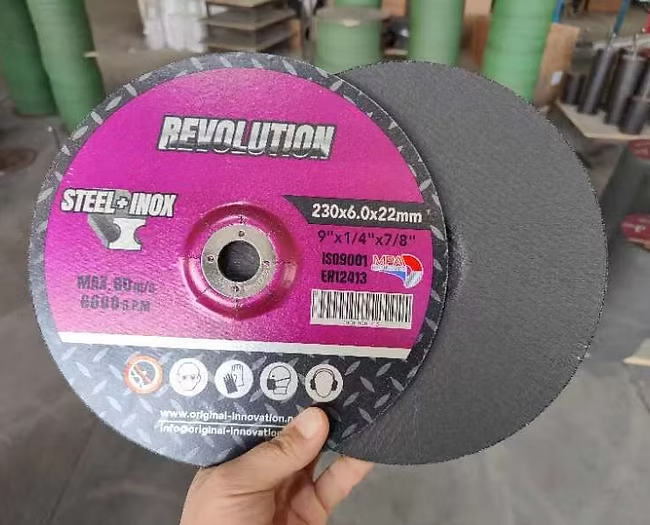
These premium discs typically feature:
Advanced Bond Technologies: Bonds engineered to withstand extreme heat and pressure, often incorporating specialized fillers.
High-Quality Abrasive Particles: Utilizing specialized ceramic alumina or CBN/Diamond materials that maintain sharpness at extremely high temperatures.
High-performance grinding discs can dramatically improve production efficiency by reducing the number of grinding passes required and extending the life of the consumable. This directly translates to a reduction in production costs and consistently enhanced surface quality. They are the necessary choice for high-volume production environments where tight tolerances and high precision are non-negotiable standards.
Grinding Tools and Operational Costs: The ROI Perspective
When evaluating grinding tools, industrial procurement teams must shift their focus from the upfront purchase price to the total operational costs and Return on Investment (ROI).
Investing in high-quality grinding discs and tools from Original Innovation leads to long-term savings through several channels:
Cost Savings Metric | Impact of High-Quality Discs |
Material Waste | High precision and reduced thermal damage minimize defects and scrap rates. |
Labor Costs | Faster material removal rates and reduced passes shorten cycle times per component. |
Downtime | Longer disc life and fewer unexpected breakages drastically reduce unplanned machine stops. |
Maintenance Costs | Reduced vibration and better balance put less stress on spindle bearings and grinding machine components. |
Rework | Improved surface quality reduces the need for secondary finishing processes. |
Regular monitoring and analysis of production costs—tracking disc life against material processed—can help identify areas for improvement and optimize grinding processes to maximize profitability.
Component Performance and Surface Finish: The Final Quality
The quality of the final component surface finish is a critical factor in virtually every industry, especially in fields like automotive, aerospace, and medical devices.
Enhanced Performance: A high-quality surface finish reduces friction, improves fatigue life, and minimizes the risk of stress fractures, thereby improving overall component performance and reducing wear and tear.
Precision Tolerances: Grinding discs are the primary tool used to achieve precise dimensional tolerances. The consistency of the disc directly dictates the consistency of the final part geometry.
Advanced grinding technologies and high-performance discs help manufacturers achieve consistent performance and high precision that meet the stringent demands of modern specifications. The right abrasive tool ensures that the component not only looks good but performs flawlessly under stress.
Conclusion and Recommendations
In conclusion, the quality of your grinding disc stock is far more than a simple supply decision; it is a strategic investment that impacts production efficiency, surface finish, component performance, and ultimately, your factory’s profitability.
Manufacturers must adopt a holistic approach:
Invest Strategically: Choose high-quality grinding discs and tools (such as those found at Original Innovation) to improve production efficiency and drastically reduce long-term operational costs.
Standardize Maintenance: Implement regular maintenance, inspection, and continuous optimization of grinding processes to ensure maximum uptime and consistent output.
Optimize Selection: Always select the right grinding wheel based on the specific material and desired finish. Utilize high-performance discs for the most critical and challenging grinding tasks.
By prioritizing disc quality and process optimization, manufacturers can achieve superior precision, enhance product quality, and secure a significant competitive advantage.


Comments